Long before anyone thought to compare typefaces, courts were already comparing marks on paper. The tradition goes back further than most people assume. Document examiners trace it to the Justinian Code, enacted in 539 A.D., which laid out how a disputed writing could be checked against a known one.
The first American case involving expert testimony on handwriting, Saure v. Dawson, wasn’t heard until 1812. The same year, a Pennsylvania court heard the first case involving printed characters, McCorkle v. Binns, ruling that once a proper foundation was laid, a jury could be permitted to compare the type and devices used in a set of newspapers. Seven years later, in Commonwealth v. Smith, another court admitted testimony from a witness who said he recognized a forged banknote by its paper, its type, and general appearance.
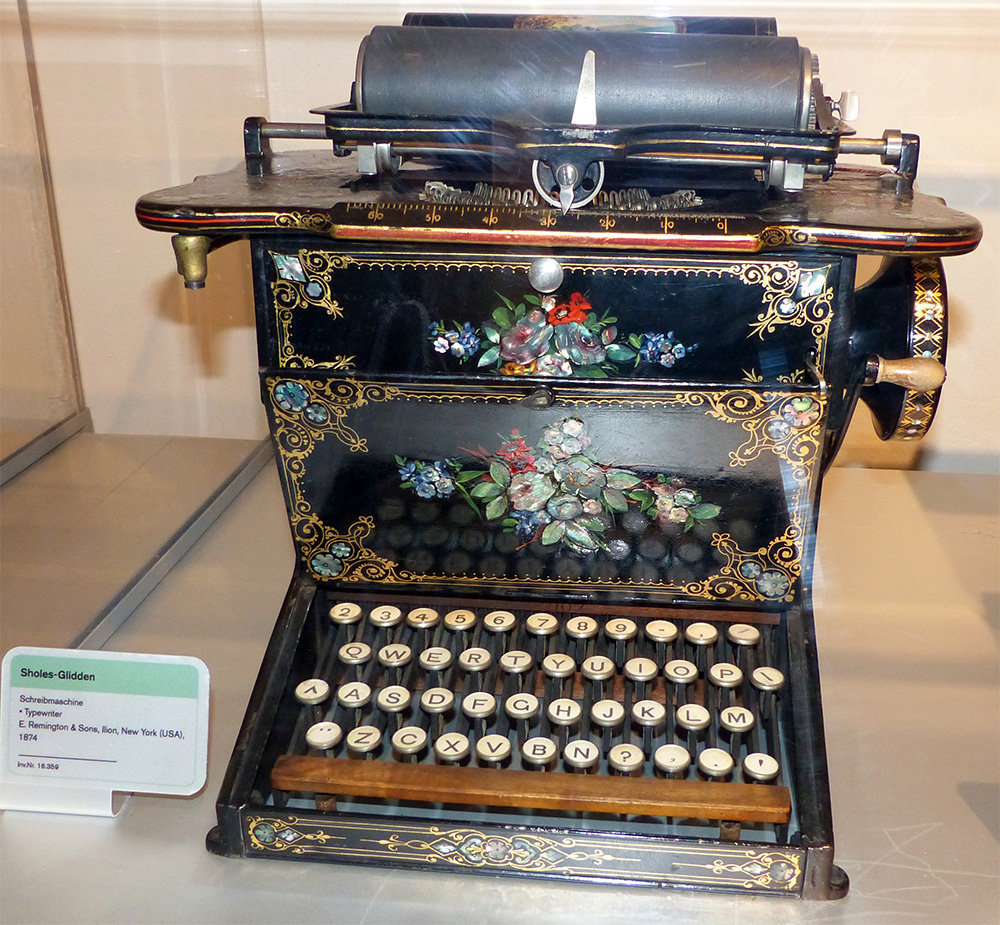
None of those involved a machine. They couldn’t have. The typewriter that made mechanical comparison possible didn’t exist in a commercially viable form until 1874, when Remington put the first Sholes and Glidden design on the market.
That machine only typed capital letters, and it hid the words from the person typing them until the platen was turned, a “blindwriter,” in the terminology of the time. The 1878 Model 2 fixed both problems with a shift key, and it sold well enough that the typewriter stopped being a novelty and started being an office fixture.
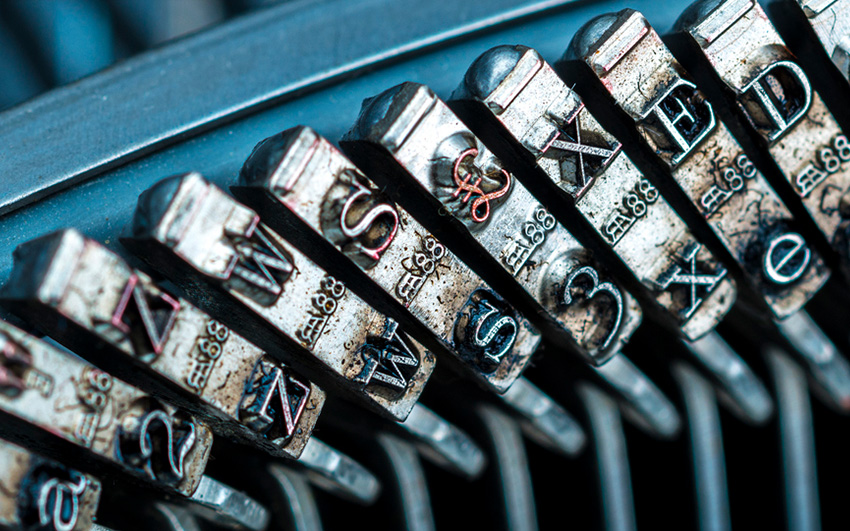
More machines meant more variation between them. A key struck for a year wears differently than a key struck for a decade, and no two machines, even off the same assembly line, wear identically.
A Detective Noticed First
The first person on record to say so wasn’t a lawyer, a document examiner, or a typewriter mechanic. It was Sherlock Holmes.
In “A Case of Identity,” published in The Strand Magazine, September 1891, Arthur Conan Doyle has Holmes lay out the whole principle to Watson, a couple of years before the first real courtroom would hear it argued:
“It is a curious thing… that a typewriter has really quite as much individuality as a man’s handwriting. Unless they are quite new, no two of them write exactly alike. Some letters get more worn than others, and some wear only on one side. Now, you remark in this note of yours… that in every case there is some little slurring over the ‘e,’ and a slight defect in the tail of the ‘r.’ There are fourteen other characteristics, but those are the more obvious.”
The first document examiner to put anything like it in writing was William Hagan, in an 1894 treatise on disputed handwriting. Both his line and the fuller case history below come from David A. Crown’s “Landmarks in Typewriting Identification,” a 1967 survey of the field that pulled the case law together in one place for the first time:
“All typewriter machines, even when using the same kind of type, become more or less peculiar by use as to the work done by them… little skill is required when comparing the work done by a dozen of them.”
Daniel Ames followed in 1900, writing that the distinctive character of typing done on different machines was usually determined “with absolute certainty,” because the accidental variations that build up in a well-used machine were “well-nigh impossible” to replicate across two of them.
Seven Receipts
The landmark case was Levy v. Rust, heard in New Jersey in 1893.
The dispute was over seven receipts, dated between February 2 and September 11, 1891. The plaintiff said the receipts had been typed on the defendant’s machine. The defendant brought in an expert to say otherwise. Not a document examiner, but a typewriter mechanic. Someone who understood the machines from the inside.
The mechanic identified three defects that ran through every one of the seven receipts. He then produced a comparison document, typed on the defendant’s machine roughly a year later, and showed that it had the same three defects.
The Hon. Mahlon Pitney heard the case and described the demonstration in his own words:
“An expert in typewriting is brought here and that expert sat down by my side at the table, and explaining his criticism of this typewriting, and I went over it carefully with the [magnifying] glass and… it appeared very clearly… He says these receipts running from February 2, 1891 to September 11, 1891, all contain certain defects in the mechanical work which are very clear to the… expert… He says that in every one of these the period is too low… the letter ‘s’ is ‘off its feet,’ and every one of them makes a bad mark, and every one marks exactly the same. There is not a period mark in one of the receipts and there is not a letter ‘s’… in one of the receipts that has not the same characteristics. Then he says that the letter ‘u’ is a little too far to the left… if you compare that typewritten work which was apparently made on the 9th of March 1892, nearly a year after this other work was done, it contains precisely the same peculiarities…”
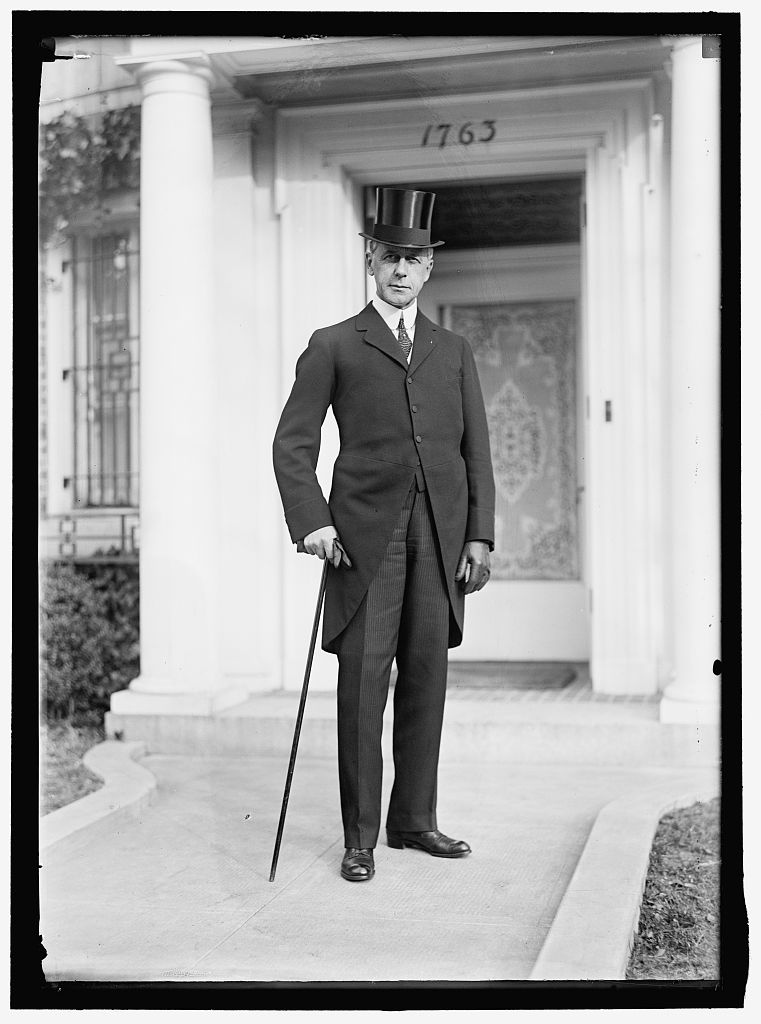
Pitney ruled for the defendant. The receipts, he found, hadn’t been typed on the defendant’s machine at all. They’d been typed on the plaintiff’s. He didn’t cite a single prior case on typewriter identification in reaching that conclusion. There wasn’t one to cite. A judge sat down at a table with a magnifying glass, listened to a mechanic explain three specific defects, and decided a machine could be trusted to testify to its own history.
The Method Spreads
Over the following two decades, the same logic showed up in other courtrooms.
In 1903, a Wisconsin court examined a document purportedly prepared in 1893 and worked out that it must have actually been typed after 1896, the year its specific typeface first appeared on a Smith-Premier machine. The document was dating itself because of the typewriter used to create it.
Two years later, a Kansas court used the same character-by-character comparison to identify the actual writer of a disputed typewritten letter, not just the machine it came from.
In 1906, a Utah court heard from an expert who’d gone further than anyone yet. He examined twenty-four typewriters in Provo City and found exactly one whose defects lined up with the documents in question, matching the lettering, the lining, and the spacing all at once.
By 1912, a New York appeals court was ready to make the principle procedural. In People v. Storrs, a trial judge had allowed typewritten exemplars into evidence purely for comparison purposes, over the defense’s objection that the exemplars weren’t otherwise relevant to the case. The appeals court upheld it, reasoning that a typewriter’s work offered “the readiest means of identification” and that there was no valid reason to keep out established samples of that work when the whole point was comparison.
Congress caught up the following year, amending federal law to formally permit the use of proven handwriting exemplars for comparison, a rule the courts soon extended to typewriting as well.
The Obvious Objection
Once a method gets trusted, someone inevitably tries to break it. The objection to typewriter identification was always the same, and it was a fair one: if a machine’s individual wear pattern is what identifies it, then in theory, that wear pattern could be erased and rebuilt to match a different machine entirely. Strip a typewriter down, swap or refile its typebars, and you’d have a forgery a document examiner might never catch.
On paper, the argument holds up. Nobody could say it was impossible.
The first real test of it came in People v. Risley. A document examiner named William Kinsley demonstrated that the words “the same” had been added to an affidavit after the fact. The body of the document had been typed on a Remington with pica type, but those two words came from a machine equipped with Underwood Medium Roman type. He compared the addition against a sample from an Underwood owned by the defendant, Risley, and found thirteen points of agreement.
Risley’s defense didn’t dispute the science. They tried to beat it. They hired a skilled typewriter mechanic, Arthur Buckwell, to rebuild an identical Underwood so it would type an exact match to the disputed words. Buckwell worked the machine over extensively and still couldn’t do it. Kinsley was able to tell the two machines’ work apart without much trouble.
That result mattered more than the case itself. It meant the theoretical objection had been given its first real chance to succeed, and it hadn’t. The question of whether a typewriter could be forged well enough to fool an examiner stayed open in theory.
In practice, for decades afterward, nobody managed it.
What the Method Would Be Asked to Do Next
A typewriter mechanic’s testimony about three worn letters is a small thing to build a discipline on. But that’s usually how a discipline starts. Not with someone setting out to found one, but with a judge deciding that a specific, checkable observation deserves to be believed.
Everything that came after Levy v. Rust, including the case that would make this method famous fifty-five years later, still runs on the same basic claim the mechanic made in 1893: that a machine leaves a signature, and that the signature can be read.
The next test of that claim wouldn’t be a civil dispute over receipts. It would be a former State Department official, a Woodstock typewriter with a serial number that didn’t match the timeline, and a jury deciding whether a machine could send a man to prison for perjury.